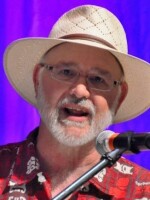
Gordon McCann began collecting Ozarks fiddle tunes in the 1970s and ended up with thousands of field recordings and even more notes about fiddle tunes and events. His collection is available from MSU Libraries. Full recordings are available on the MSU Libraries' YouTube Channel.
According to the library, McCann was born Charles Gordon McCann on August 27, 1931 in Joplin, but he and his parents Charles and Jadah moved to Springfield soon after. McCann took over Springfield Blueprint and Photocopy Company, which was started by his dad. He became friends with folklore collectors Vance Randolph and Max Hunter and went on to co-author volume two of Randolph's Ozark Folklore: An Annotated Bibliography. He played guitar at area jam sessions and at one of those, he met fiddler Art Galbraith, who he later performed professional with for 17 years.
Gordon McCann was 94.
The following is a transcript from a story produced about McCann in 2010 by KSMU’s Mike Smith:
Mike Smith: That's Dixie Blossoms, performed by the late, great Ozarks fiddler Art Galbraith and today's sense of community profile subject guitarist Gordon McCann. Viewers of Ozarks Public Television will recognize Dixie blossoms as theme music for the OzarksWatch video magazine, which explores the area's rich cultural history, past and present. Gordon McCann's long time, multi-layered contribution to the production of OzarksWatch is but one example of his seemingly tireless efforts in preserving and promoting Ozarks culture.
Gordon McCann: I'm a cultural preservationist, is what they now call me, and I am not a folklorist. Everybody keeps calling me a folklorist. But I'm not a folklorist. I'm really a pack rat. In other words, I've just kind of saved everything.
Mike Smith: A big portion of what Gordon McCann has saved is traditional music of the Ozarks, and what started as a way for Gordon to learn how to be a better guitarist has turned into the public having access to a nearly 40 year audio and written record of old-time music performed live in a variety of settings across the Missouri and Arkansas Ozarks.
Gordon McCann: It started out down at Emanuel Wood's Ozark Opry on the square in Ozark. I was just mesmerized by the whole thing. It was an old false front store building. It was held up by two other buildings, and that's the only way it could stand, I'm sure. And here was this big plate glass window. It had been an old store, like a hardware store or something, and they sat in the front part of it where the display window would have been, and one light bulb hanging from the ceiling and an old potbellied stove in the back. And all these people sitting around in the biggest mixture of chairs and couches you ever saw. And there was a white-haired man playing the fiddle along with Emmanuel Wood. That's where I met Art Galbraith. (We would) be partners for 17 years.
Mike Smith: So what year are we talking, Gordon?
Gordon McCann: Probably the first tape I made as far as an interview tape was probably about 1971 or 72. And then I didn't really get down to Ozark and start trying to learn myself (from) what I was recording until probably 75 or 76. That's about the time I would have met Art. And oh gosh, there were some wonderful fiddlers, Lonnie Robertson and Raymond Campbell. These were really tremendous fiddlers and a bunch of others too. Mainly I had a little old tape recorder that belonged to my son in high school, a little GE recorder, and I started taping the stuff for me to go home and learn the tunes. I didn't know so many of these. But I had no idea of the vast repertoire of these tunes that these fiddlers have. And of course, I'm talking about fiddling. But the singing would have been the same thing, you know. And that type of thing. So, the more I did that, the more it got me. My gosh, you know, how do these people remember these things? And then I started checking out and found these things are centuries old. Some of these tunes go back to the 1600s when they were first mentioned. Even so, you know, they were even older than that.
Mike Smith: With tape recorder in one hand and guitar in the other. Gordon McCann would travel across the region, recording traditional fiddle playing, singing and storytelling. He'd show up at jam sessions in private homes. The Johnson Schoolhouse near Gainesville Square, dances in Douglas and Texas counties. Seasonal sessions at the old schoolhouse near McDowell in Barry County, the Saturday night Oldfield Opry and the potluck traditional sessions every Monday evening at McClurg in eastern Taney County.
Gordon McCann: Yeah, every Monday night. And they eat. They usually ate around somewhere around 630, and then by seven or so, right in there is when the musicians all got up and went up in the circle, all sit in a circle. I'd gone there scores of times, you know, but I always record it because even though it's the same and it's pretty much the same group, somebody will play something new. That always happens. There's a big variety of styles. We have tunes, types of tunes. We play hoedowns, which are really the old reels and hornpipes, and we've just sped them up in this part of the country to compliment square dancing. And then you'll have waltzes and you'll have rags, and you'll have schottisches occasionally blues. It's a Ozarks type of blues. You know, you can play all these in one night. Tempo changes all the time. Good thing about these tapes I have. At first, I would forget to turn it off between tunes by accident, but I got to where? By design, I'd leave it going because that's when all the talking was going. Do you remember old so-and-so's house or something? Now they'd be talking about in 1880s and 90s some of them.
Mike Smith: Gordon McCann not only preserves the past when it comes to traditional Ozarks music, he fosters the future. For many years he's worked with young fiddlers like Rachel Hoagland, Ashley Hall, David Scrivner and others with presentations and performances at area libraries, fiddle camps and the annual Ozarks Celebration Festival at Missouri State University. David Scrivner, who just completed his comprehensive exams and is now working on his dissertation to earn a Ph.D. in literature from the University of Dallas, teaches literature part time at College of the Ozarks. Scrivner is a regular at McClurg and has been mentored by McCann since high school. These learning sessions often take place in McCann's Springfield home.
David Scrivner: We never have a set plan. We just sit down and start playing music and then invariably Gordon starts telling stories about the history of the tunes, like both the history that he has researched and read, but also things that he has experienced himself or heard other fiddlers talk about. So, it's this great blend of enjoying the music together, but also enjoying the stories that accompany the music. He's helped me to learn more about the culture of the Ozarks as well as the history. Which is my culture and my history. And so he's actually helped me to understand more about what my heritage is. Which has helped me have a sense of my own sort of identity, I guess, as an Ozarker.
Tom Carter: I think you could say that Gordon is without overstating anything synonymous with the Ozarks.
Mike Smith: Tom Carter is programing and production manager for Ozarks Public Television. Since 1999, Tom has worked with Gordon McCann on the production of the Ozarks Watch Video magazine.
Tom Carter: And right away, Gordon became instrumental to the success of that show. And from the beginning, he generously shared his knowledge and expertise with us, often suggesting topics helping arrange guests, sometimes appearing on the program himself. You know, Gordon's passion about the Ozarks is legendary. His knowledge of the Ozarks equally legendary. He's just this well of information. Anyone who knows Gordon knows that you know his passion and interest in the Ozarks, if it can be narrowed, would be music and specifically fiddle music. So, he's been instrumental in helping us arrange a number of programs around the fiddle and traditional musicians.
Gordon McCann: Like I say, we're changing so fast here in this part of the Ozarks, and it's going to get lost if we don't really hang on to it. And not just pure history, but also the social history and the musical history of this region.
Mike Smith: In September 2007, Gordon McCann announced the donation of his collection of music and folk life material to Missouri State University, the Special Collections Department at Meyer Library. A grant received by the College of Arts and Letters allows for McCann's tape recordings and written notes from each session to be digitized and made available to the public in the library's reading room.
Gordon McCann: What I have here is just a history record, really. It's just like somebody's memoirs or something, you know. But there's around shoot probably getting close to 4000 hours of this. My index really is a FileMaker Pro program. And what it does, it's, uh, the name of the tune the fiddler. What they played the banjo or a fiddle or whatever, or whether it was dialog, uh, then where it was and, uh, the, you know, the location of the date, of course. And then who are the second, who all the musicians were, if I knew. (There's) over 68,000 entries in that (index).
Mike Smith: Gordon McCann graduated from Southwest Missouri State Teachers College in 1954 and was awarded an honorary doctorate degree from Missouri State University in May 2010. He served as a music consultant to director Debra Granik for the film Winter's Bone and on many occasions worked with the Library of Congress, the National Geographic Society, the Smithsonian Institute, the National Endowment for the Arts, and the Missouri Arts Council on stories and events related to traditional Ozarks music and culture. With friend drew Beisswenger, Gordon literally wrote the book on the region's rich fiddle history. Ozarks Fiddle Music, published by Mel Bay. McCann has produced and performed on five Rounder Records, LPs or CDs, including the three-volume series Traditional Fiddle Music of the Ozarks, and has recently rereleased Dixie blossoms on the Musical Traditions label. Gordon McCann will serve as Grand Marshal for the 2011 Springfield Saint Patrick's Day Parade, March 19th, and is married to Mona.
Michele Skalicky contributed to the story on the death of McCann.